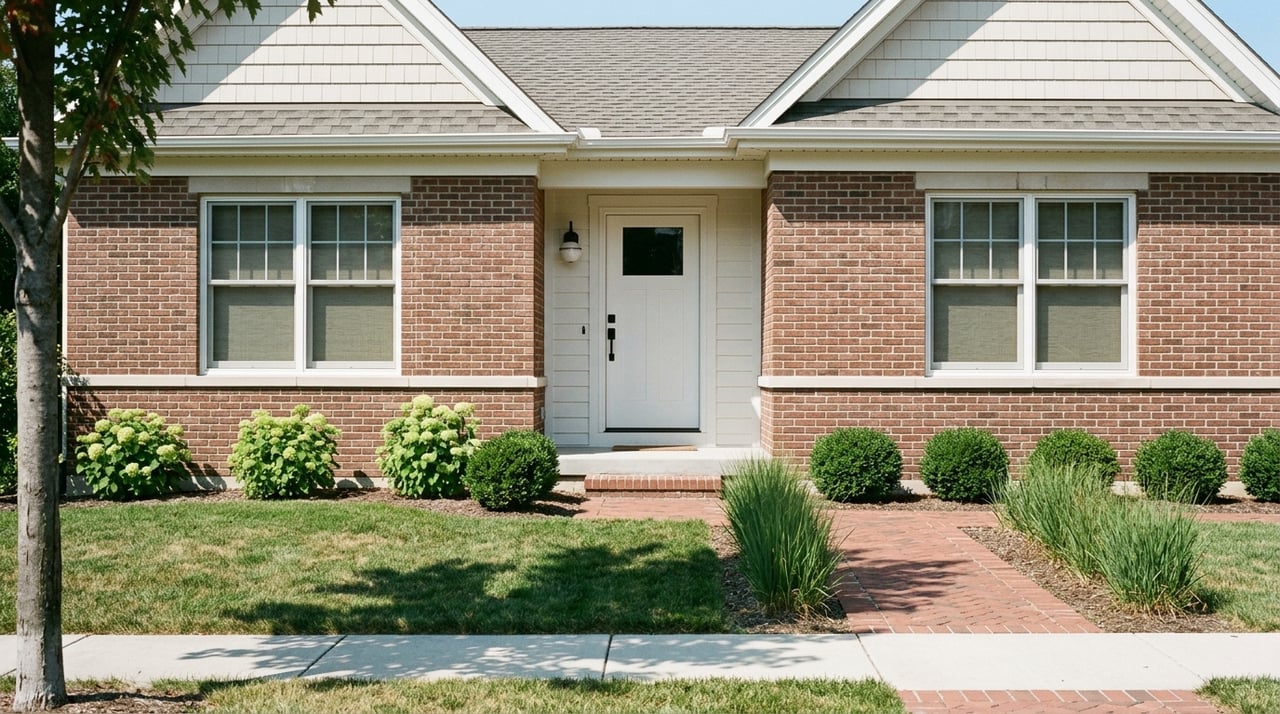
Historic vs Newer Homes in Wheaton: What Fits Best?
June 4, 2026
June 4, 2026
Wondering whether a historic home or a newer build is the better fit in Wheaton? It is a smart question, because in this market, you are often choosing between charm and predictability, or trying to find the right balance of both. If you understand how Wheaton’s housing stock is built, what older homes may require, and where newer homes stand out, you can make a much more confident decision. Let’s dive in.
If you are starting your search in Wheaton, it helps to know that brand-new construction is not the norm. According to CMAP data, the median year built for Wheaton housing is 1975, and the largest share of homes falls in the 1970 to 1989 range.
That matters because most buyers here are not choosing between a 100-year-old house and a brand-new one. More often, you are comparing an older character home with a smaller pool of newer options, while a large middle category of mid-century and late-20th-century homes fills much of the market.
Wheaton is also strongly oriented toward single-family homes. CMAP reports that 58.7% of housing units are single-family detached, and 50.9% of city acres are classified as single-family residential.
For many buyers, a historic home means details you can feel the minute you walk in. In Wheaton’s historic northside area, the city’s design guidelines reference styles such as Greek Revival, Italianate, Queen Anne, American Four Square, Tudor Revival, Colonial Revival, Dutch Colonial Revival, Bungalow, and Ranch.
These homes often include features buyers still love today, like front porches, prominent entries, and detached garages set behind the house on many older lots. If you value architectural character and a home that feels distinct, older homes can offer a lot.
One important local detail is that Wheaton does not have a citywide historic district. Instead, the city has a Northside Residential Overlay District, which is a zoning overlay meant to promote high-quality design in the historic northside neighborhood.
That distinction matters if you are thinking about future changes. The city says teardowns are not prohibited in the overlay, but neighborhood demolition meetings are required, and the overlay also applies to new construction and additions.
If you are considering a home in that area, you will want to understand those rules before you buy, especially if your long-term plan includes a major addition or rebuild.
If you love older homes, Wheaton gives you ways to learn more about them. The city’s Register of Historic Places program uses age plus architectural or historical significance as criteria, and the city encourages owners to use the public library and Historic Commission for home-history research.
That can be helpful if you want more than curb appeal. You may be able to better understand the home’s background, design style, and place in Wheaton’s architectural story.
Older homes can be wonderful, but they usually ask more of you as a buyer. One major issue is lead-based paint.
The EPA says older homes are more likely to contain lead-based paint, including an estimated 87% of homes built before 1940 and 24% of homes built between 1960 and 1978. The EPA recommends treating pre-1978 homes as if they contain lead unless testing shows otherwise.
If you plan to renovate, repaint, replace windows, or disturb painted surfaces, the EPA advises using lead-safe certified professionals. That is especially important if your dream home includes projects you want to tackle soon after closing.
A historic home does not have to stay inefficient. The U.S. Department of Energy says a home energy assessment can help identify where a home is losing efficiency, what fixes to prioritize, and what to address before making energy-saving upgrades.
After that, weatherization work often focuses on air sealing, insulation, moisture control, and ventilation. In other words, an older Wheaton home may become more comfortable and efficient over time if you plan updates in the right order.
If your priority is simplicity, newer homes may feel easier to live with from day one. In Wheaton, though, they are a smaller part of the market than many buyers expect.
CMAP data shows that homes built from 1990 to 2009 make up 13.2% of housing units, and homes built in 2010 or later account for just 4.8%. So if you want newer construction, you may have fewer choices and need to move quickly when the right home becomes available.
The biggest appeal of newer homes is usually performance. ENERGY STAR says certified new homes include features like quality-installed insulation, high-performance windows, a well-sealed home envelope, high-efficiency heating and cooling, and independent inspections and testing.
ENERGY STAR also says certified new homes are at least 10% more efficient than new homes built only to minimum code. The Department of Energy describes certified new homes as systems designed to work together for comfort, efficiency, and durability.
For you, that can mean fewer immediate projects and more predictable monthly costs. If you want a more turnkey experience, that predictability can be a major advantage.
Even with newer homes, it is worth asking careful questions. How new is the home, really? What construction standards or certifications were used? Do the monthly carrying costs still fit comfortably within your budget?
A newer home may reduce your project list, but you still want to weigh the purchase price, ongoing costs, and how well the home fits your lifestyle over the next several years.
There is a reason so many buyers in Wheaton end up somewhere between historic charm and new construction. The largest share of the city’s housing stock sits in the middle, especially homes built from 1940 to 1969 and 1970 to 1989.
That middle ground can offer a practical mix of space, function, and upgrade potential. You may find a well-maintained mid-century or late-20th-century home with a solid layout, enough character to feel interesting, and a more manageable update list than a much older property.
For renovation-minded buyers, this can be a sweet spot. You may be able to improve style and efficiency over time without taking on the full complexity that sometimes comes with a pre-1940 home.
One of the simplest ways to choose is to separate your style preference from your maintenance tolerance. It is easy to fall in love with looks alone, but the right choice usually comes down to how you want to live.
A historic or older home may be a better fit if you want:
This path often works well if you are comfortable planning projects over time and want a house with personality.
A newer home may be a better fit if you want:
This option often makes sense if your schedule is full and you would rather avoid managing projects right away.
If you are looking at an older home, focus on questions like:
If you are looking at a newer home, ask:
In Wheaton, this decision is rarely just about age. It is about how much work you want to take on, how much character matters to you, and whether you see potential where others may only see projects.
That is why a design-minded approach can help. Sometimes the better buy is not the newest house. It is the house with good bones, a layout that works, and a clear path to smart, cost-conscious updates over time.
If you want help weighing charm, condition, and renovation potential in Wheaton, Nancy Winchester can help you look beyond the surface and choose a home that fits both your style and your budget.
Stay up to date on the latest real estate trends.
Born from a passion for both real estate and design, I bring a unique perspective to every transaction. With years of experience in sales and a trained eye for interiors, I help sellers showcase their homes with creativity and minimal expense, giving them a competitive edge in today’s market.

NANCY WINCHESTER
10 N Martingale Rd Ste 400 Schaumburg IL 60173